





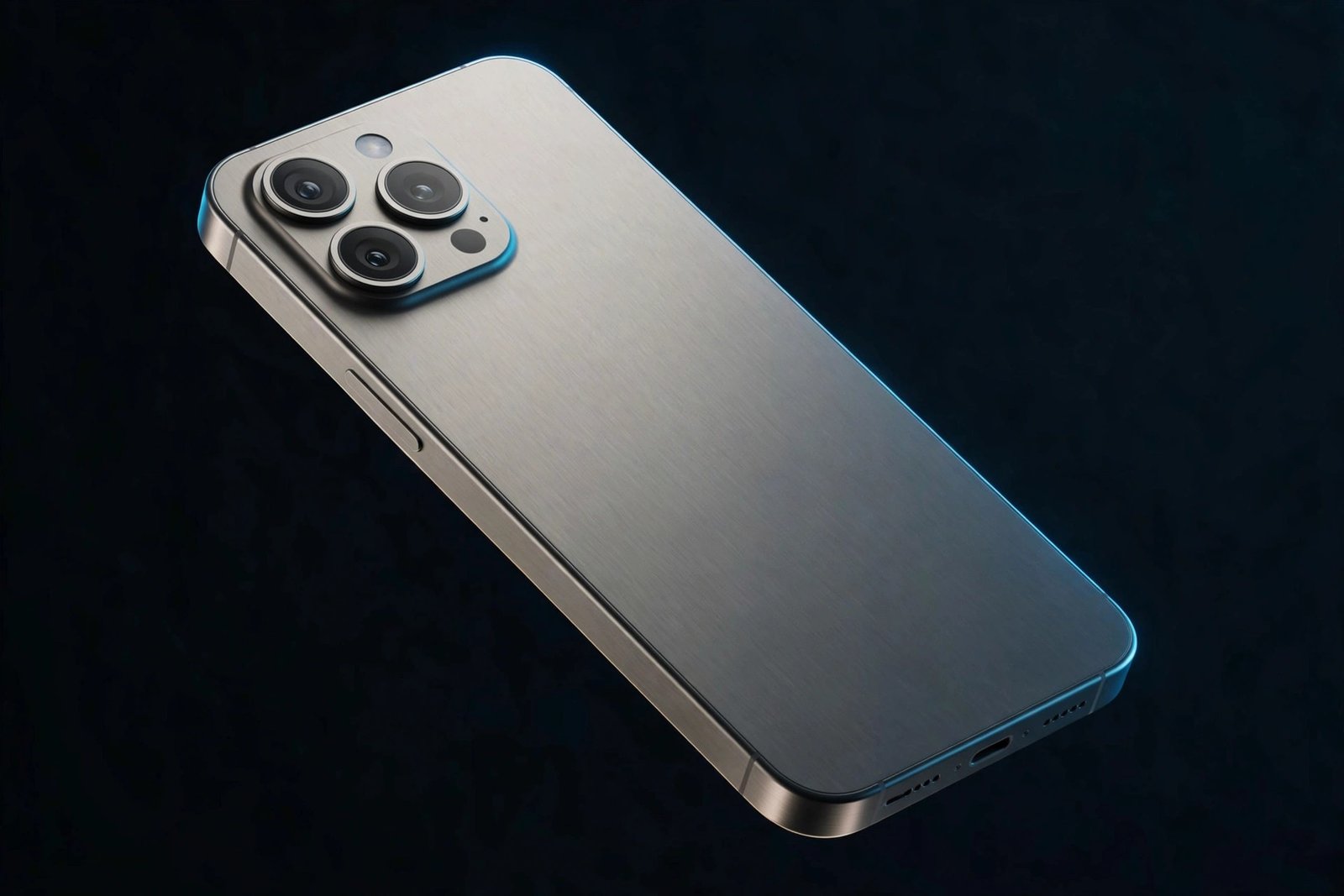
Apple designs almost every component inside the iPhone itself, which is why iPhone hardware reads differently from any Android spec sheet. Here is a brief breakdown of the chips, graphics, cameras and displays in the current iPhones sold in the USA and UK.
CPU and GPU: the A-series
Every iPhone runs an Apple-designed A-series chip. The iPhone 17 Pro Max uses the A19 Pro (3 nm), and the iPhone 18 Pro Max moves to the A20 Pro. Apple builds its own CPU cores rather than licensing a ready-made design, so iPhones consistently post some of the highest single-core speeds of any phones — the figure that drives app launches, photo processing and general responsiveness. The multi-core side is paired with a large cache and fast memory, which keeps sustained performance strong for a phone with no fan.
Graphics come from Apple’s own GPU. The A19 Pro carries a 6-core GPU and the A20 Pro a 7-core GPU with Neural Accelerators, with hardware-accelerated ray tracing for console-style lighting in games. Pro models add a vapour chamber bonded to the aluminium frame, which spreads heat so the chip can hold peak speeds longer during gaming or 4K video recording. A dedicated Neural Engine handles Apple Intelligence features — photo cleanup, writing tools, live translation — on-device.
Camera hardware
Current Pro iPhones use a 48MP Fusion camera system: a 48MP main camera with sensor-shift optical image stabilisation, a 48MP ultrawide, and a periscope telephoto (48MP, 100mm on the 17 Pro Max) for 4x–5x optical-quality zoom. The iPhone 18 Pro Max’s main camera adds a variable aperture (ƒ/1.48 to ƒ/4.0), letting the lens itself control light and depth of field like a standalone camera. “Fusion” means one sensor crops and bins pixels to deliver multiple focal lengths — 24mm, 28mm, 35mm — from a single lens. The Photonic Engine applies Deep Fusion processing to every shot, and Pro models record ProRAW photos and ProRes video, which is why iPhones remain the default choice for mobile video creators.
Display
Every current iPhone uses a Super Retina XDR OLED panel. Pro models get LTPO technology with ProMotion: the refresh rate adapts from 1Hz to 120Hz, enabling the always-on display without draining the battery. The 17 Pro Max reaches 1,600 nits typical HBM brightness and 3,000 nits peak outdoors — among the brightest phone screens sold in the US and UK — with HDR10 and Dolby Vision support and a resolution of 1320 x 2868 on the 6.9-inch panel.
Current flagships
See the full specifications: iPhone 18 Pro Max and iPhone 17 Pro Max, or browse the full Apple range.
FAQ
Does the iPhone have a separate GPU? No — the GPU is part of the A-series chip, designed by Apple, with hardware ray tracing on Pro models.
Why do iPhones have less RAM than Android rivals? Apple’s vertical integration — its own chip, OS and apps — means iOS needs less RAM to deliver the same real-world speed.
What is ProMotion? Apple’s name for its adaptive 1–120Hz LTPO display, which lowers refresh rate to save power and raises it for smooth scrolling and gaming.