





Google Pixel phones do not win on raw spec-sheet numbers. They win on what Google’s hardware and software do together: a custom Tensor chip, cameras that lean on computation as much as optics, and displays tuned for real-world brightness. Here is how the hardware actually works, from the chip to the screen.
CPU and GPU: the Tensor G6
Every current Pixel runs Google’s own silicon. The Pixel 11 Pro XL and Pixel 11 Pro use the Tensor G6, a 7-core chip built around ARM’s C1 cores: one C1-Ultra core at 4.1 GHz, four C1-Pro cores at 3.4 GHz and two more C1-Pro cores at 2.65 GHz. Graphics come from an IMG CXTP-48-1536 GPU, and the Titan M3 security coprocessor handles on-device security.
The point of Tensor was never to beat Qualcomm in benchmarks. It is built to run Google’s AI features on the device: photo processing, call screening, live translation and the Gemini assistant. That is why the chip’s design favors the machine-learning workloads Pixels actually run over peak gaming frame rates.
The cheaper Pixel 9a uses the previous-generation Tensor G4 with a Mali-G715 MP7 GPU. It is slower, but it runs the same AI features, and for everyday use the difference is smaller than the spec sheet suggests.
Camera hardware: computation over megapixels
Pixel cameras start with strong sensors and then do most of their work in software. The Pixel 11 Pro XL’s pro triple system uses a 50MP wide camera, a 48MP ultrawide with macro focus and a 48MP 5x telephoto lens, with Pro Zoom reaching up to 120x. Optical quality is maintained at 0.5x, 1x, 2x, 5x and 10x, which covers the focal lengths people actually use.
The Pixel 9a shows the same philosophy at a lower price: a dual system with a 48MP wide camera with optical image stabilization and a 13MP ultrawide, with Super Res Zoom up to 8x. The hardware is modest, but the processing pipeline is the same family as the flagships, which is why the 9a’s photos punch far above its price.
The Pixel 11 Pro Fold takes a different trade: a 48MP wide, 10.5MP ultrawide and 10.8MP 5x telephoto, tuned to fit inside a folding body. It is the weakest camera of the current range on paper, and the most interesting phone of the range in the hand.
Display: LTPO OLED with adaptive refresh
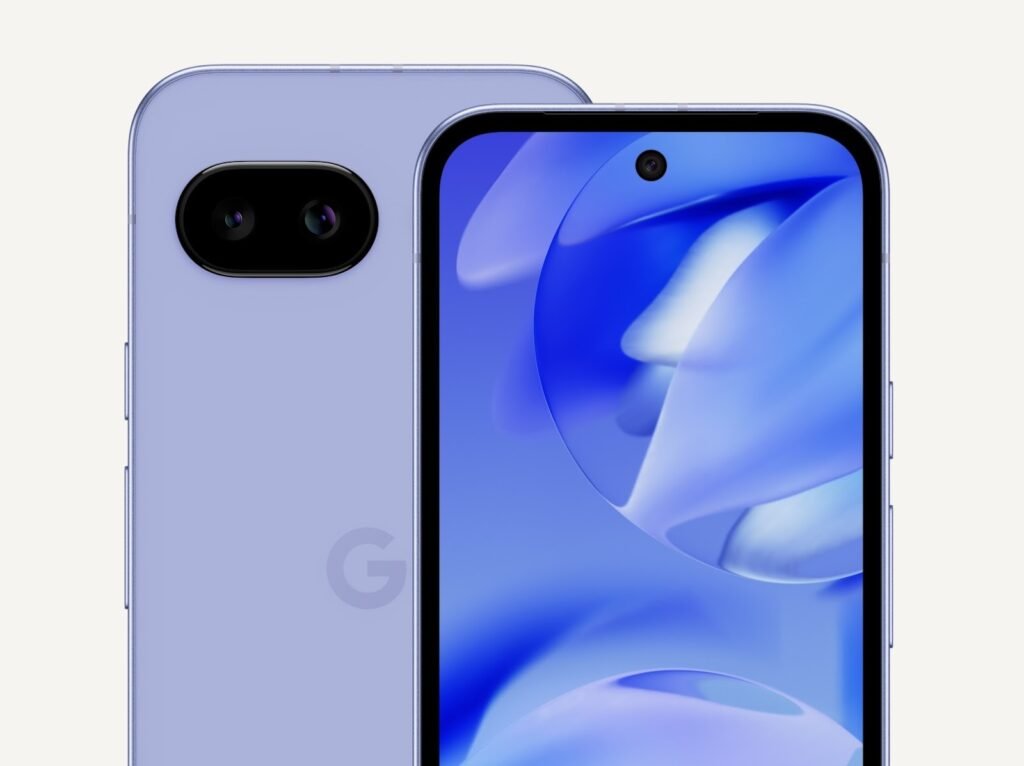
Pixel displays use LTPO OLED panels that can vary their refresh rate from 1Hz to 120Hz depending on what is on screen. The Pixel 11 Pro XL’s 6.8-inch panel runs at 1344×2992 resolution, while the Pixel 11 Pro’s 6.3-inch panel runs at 1280×2856. Both drop to 1Hz when showing a static image, which saves battery without you noticing.
The Pixel 9a’s 6.3-inch OLED runs from 60Hz to 120Hz, a simpler adaptive range that still feels smooth in daily use. Google calls its panels Actua displays, a branding name for the same OLED technology with high brightness tuning for outdoor use.
Current flagships
The Pixel range in late 2026 is the Pixel 11 Pro XL (https://cellularheros.us/phones/google-pixel-11-pro-xl/), the Pixel 11 Pro (https://cellularheros.us/phones/google-pixel-11-pro/), the Pixel 11 Pro Fold (https://cellularheros.us/phones/google-pixel-11-pro-fold/) at $1,799.98, and the Pixel 9a (https://cellularheros.us/phones/google-pixel-9a/) at $298.30. The Pro XL is the camera and battery pick, with a 5,115mAh cell and 45W charging; the Pro is the same phone in a smaller body; the Fold is the halo device; and the 9a is the value entry point into the same software experience.
If you are choosing between them, the decision is simple: buy the 9a if you want the Pixel experience for the least money, and buy the Pro XL if you want the best camera and the biggest battery. The hardware gap between them is real, but the software gap is almost zero.
FAQ
What chip does the Pixel 11 Pro use?
The Google Tensor G6, a 7-core chip with ARM C1 cores up to 4.1 GHz, paired with the Titan M3 security coprocessor.
Is the Pixel camera hardware or software?
Both. The sensors are strong, but most of the image quality comes from Google’s computational photography running on the Tensor chip.
What is an Actua display?
Actua is Google’s brand name for its OLED displays, tuned for high brightness and, on the Pro models, an adaptive 1–120Hz refresh rate.
Sources: Pixel 11 Pro XL specs (https://cellularheros.us/phones/google-pixel-11-pro-xl/), Pixel 11 Pro specs (https://cellularheros.us/phones/google-pixel-11-pro/) and Pixel 9a specs (https://cellularheros.us/phones/google-pixel-9a/)