





Two quiet hardware changes, eSIM and satellite connectivity, have reshaped what it means for a phone to be “connected.” The first is the eSIM, a SIM card that is soldered into the phone instead of sitting in a tray. The second is satellite connectivity, a radio link that lets a phone reach help when no cell tower is in range. Neither shows up in a camera sample or a benchmark, but both decide what your phone can do in the moments that matter. Here is how they work, and which current flagships have them.
eSIM: the SIM card becomes software
A traditional SIM is a small plastic chip that tells the network who you are. An eSIM does the same job from a tiny chip built into the phone’s motherboard. There is nothing to insert, nothing to lose, and nothing to swap when you change carriers. You activate a plan by scanning a QR code or tapping through your carrier’s app, and the phone downloads a secure profile onto the eSIM chip.
The practical win is carrying more than one line. The iPhone 18 Pro Max runs dual eSIM, with two active eSIMs and room to store eight or more profiles, so a work line and a personal line can live on the same phone, plus a travel eSIM for trips. The Pixel 11 Pro XL matches that in the US, with dual eSIM and storage for eight or more profiles. The Galaxy S26 Ultra takes a hybrid route in the US: a nano-SIM slot plus eSIM, with two lines active at a time.
Not every flagship has gone all-in. The OnePlus 16 still uses dual nano-SIM with no eSIM at all, and the Redmi Note 17 Pro Max 5G keeps every option open: nano-SIM plus nano-SIM, nano-SIM plus eSIM, or eSIM plus eSIM. That split is worth knowing before you buy. If your carrier or your travel habit depends on a physical SIM, check the SIM field in the spec sheet, not just the headline.
Switching phones used to mean moving a plastic card. With eSIM it means transferring a profile, which the carriers now handle through their apps. Our guide to transferring your eSIM covers the steps for US carriers.
Satellite: a phone that calls for help with no bars
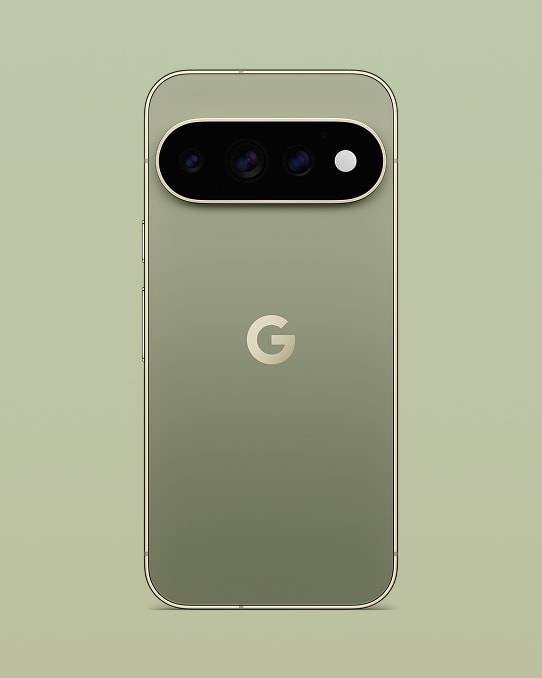
Satellite connectivity is a different kind of radio. Normal phone signals travel a few miles to a nearby tower. Satellite messages travel hundreds of miles to a satellite in low orbit, which is why the phone needs a clear view of the sky and why messages take longer to send. The hardware is a dedicated satellite modem and antenna tuning built into the phone, separate from the regular 5G radio.
On current flagships the feature is aimed at emergencies first. Apple’s satellite service on the iPhone lets you send SOS messages and share your location when you are off the grid, and Google’s Pixel line offers satellite SOS in the same spirit. The messages are short and text-only: a satellite link has far less bandwidth than a cell tower, so it carries an emergency text, not a video call.
The most literal example on our catalog is the Blackview Xplore 2 Satellite, a rugged flagship built around the idea. It pairs a 6.73-inch LTPO AMOLED display at 120Hz with a 2600-nit peak brightness and a Dimensity 8300 chip, and it is the satellite variant of Blackview’s rugged line, made for places where towers do not reach. It still uses two physical nano-SIM slots, which shows that satellite and eSIM are separate choices: a phone can have one, both or neither.
Current flagships
The split across today’s flagships tells the story. The iPhone 18 Pro Max and the Pixel 11 Pro XL are eSIM-first in the US, with satellite SOS built in, and they are the easiest phones to set up with two lines. The Galaxy S26 Ultra keeps a physical SIM slot alongside eSIM, which suits anyone who still swaps SIMs when traveling. The OnePlus 16 skips eSIM entirely in favor of dual nano-SIM. And the Blackview Xplore 2 Satellite goes the other way, pairing physical SIMs with satellite hardware for off-grid use. None of these is wrong. The right pick depends on whether you value two digital lines, a physical card, or a signal where no tower exists.
FAQ
What is an eSIM?
An eSIM is a SIM built into the phone as a chip instead of a plastic card. You activate a plan by downloading a carrier profile, and most eSIM phones can store several profiles and keep two lines active at once.
Do I still need a physical SIM card in 2026?
It depends on the phone. US iPhones and Pixels are eSIM-only, while the Galaxy S26 Ultra and the OnePlus 16 still offer a physical SIM slot. Check the SIM field before you buy.
How does satellite connectivity work on a phone?
The phone sends short text messages to a satellite in low orbit instead of a cell tower. It needs a clear view of the sky, and it is designed for emergency SOS and location sharing, not calls or browsing.
Which phones have satellite connectivity?
The iPhone 18 Pro Max and the Pixel 11 Pro XL offer satellite SOS, and the Blackview Xplore 2 Satellite is a rugged phone built specifically around satellite connectivity for off-grid use.
Sources: Blackview Xplore 2 Satellite | iPhone 18 Pro Max | Google Pixel 11 Pro XL | Samsung Galaxy S26 Ultra | OnePlus 16 | How to Transfer Your eSIM to a New Phone