





A few years ago, 5,000mAh was the ceiling for a flagship phone battery. Today, slim flagships ship with 7,000mAh, 8,000mAh and even 10,000mAh-plus cells — and the phones are no thicker for it. The change is a different battery inside: the silicon-carbon battery.
How Silicon-Carbon Batteries Work
A phone battery stores energy by moving lithium ions between two electrodes. In a conventional cell, the negative electrode — the anode — is graphite, a form of carbon, and ions slot between its layers as the phone charges. It is proven, but graphite can only hold so many ions.
A silicon-carbon battery keeps the same lithium-ion design and swaps part of the graphite for silicon, which can hold far more lithium ions than graphite for the same weight — roughly ten times as much. The same size cell stores noticeably more energy.
Pure silicon has one serious flaw: it swells dramatically as it absorbs lithium, cracking over repeated charges. Makers solve this by using only a small share of silicon, mixed into a carbon structure at a tiny scale, so the swelling is absorbed instead of tearing the cell apart.
Capacity Gains vs Graphite
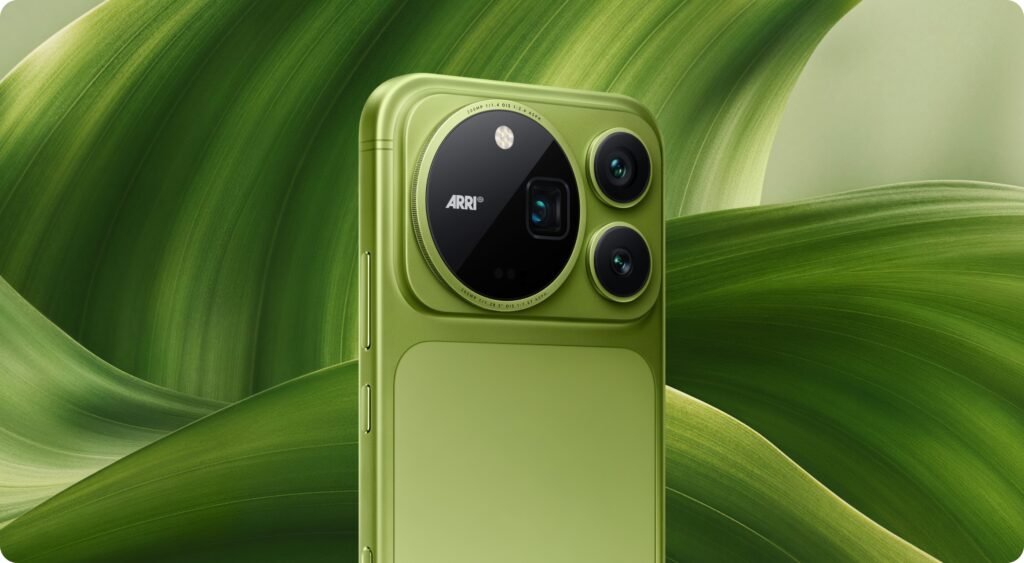
The payoff shows up in the spec sheet. A graphite-era flagship topped out near 5,000mAh in a slim body. The current catalog tells the new story: the OnePlus 15 carries 7,300mAh in a body just 8.1 mm thick, the Honor Magic9 Pro Max fits 8,000mAh into 8.59 mm, and the Xiaomi 18 Pro Max packs 8,500mAh at 8.4 mm. Honor pushes further, with the Honor Win2 at 10,100mAh and the Honor X9e Pro at 11,000mAh — both under 8.5 mm thick.
The extra capacity does not come from a fatter phone. Because silicon stores more energy per gram, makers can fit a bigger battery into the same space. Budget phones benefit too: the Oppo F33 5G carries a 7,000mAh battery at 189 grams and 8.0 mm thick, a combination a graphite cell could not have delivered at that weight.
One honest limit: figures of 12,000mAh and above belong to a different class of phone. The catalog’s biggest batteries sit in rugged models with bodies over 25 mm thick and weights above 600 grams. Silicon-carbon is what makes big batteries slim — it is not magic.
Charging and Heat
A bigger battery takes longer to fill, so brands pair silicon-carbon cells with fast wired charging. The Xiaomi 18 Pro Max charges at 100W wired with 50W wireless, the Honor Magic9 Pro Max at 100W wired with 80W wireless, and the OnePlus 15 at 80W wired with 50W wireless. Even the mid-range Realme GT 8 Pro pairs its 7,000mAh cell with 120W wired charging.
Speed brings heat, and heat is a battery’s enemy. Makers manage it with split-cell designs, charging circuitry that throttles power as the cell fills, and cooling hardware such as vapor chambers — which is why a phone charges fastest at first and slows near full. That taper is deliberate, and it protects the cell.
Longevity and Safety
The fair question about a new battery chemistry is whether it lasts. Silicon’s swelling is the main wear mechanism, and it is the problem makers spent years engineering around: the carbon framework, the small silicon share and the cell-management software keep expansion under control across hundreds of charge cycles.
Habits matter as much as chemistry. Charging to 80 percent instead of 100, keeping the phone cool while it charges, and using the phone’s battery-health features all slow wear on any lithium-ion cell, silicon-carbon included.
On safety, silicon-carbon cells are still lithium-ion cells at heart, built and tested to the same standards as the graphite cells they replace. The chemistry change is in the anode material, not in a new kind of fire risk.
Current Flagships
Silicon-carbon batteries have moved from experiment to standard equipment in a single generation. The Xiaomi 18 Pro Max leads flagships on capacity at 8,500mAh, the Honor Magic9 Pro Max pairs 8,000mAh with 80W wireless charging, and the OnePlus 15 shows how light a big-battery phone can be at 7,300mAh and 211 grams. Browse the full lineups on the Xiaomi, Honor and OnePlus brand pages.
FAQ
What is a silicon-carbon battery?
It is a lithium-ion battery whose anode mixes silicon into the usual graphite. Silicon stores far more lithium ions than graphite, so the cell holds more energy in the same size.
Do silicon-carbon batteries last as long as normal batteries?
They are designed to. The silicon share is kept small and held in a carbon structure to control swelling, and battery-health software manages charging. With normal care, they should age like any modern flagship battery.
Why do new phones have 7,000mAh or 8,000mAh batteries now?
Because silicon-carbon anodes store more energy per gram. Makers can fit a much larger battery into a slim phone without making it thicker or heavier — so 7,000mAh and 8,000mAh have become normal for flagships.
Sources: Xiaomi 18 Pro Max, Honor Magic9 Pro Max, OnePlus 15, Honor Win2, Honor X9e Pro, Oppo F33 5G, Realme GT 8 Pro — Cellular Heros catalog (battery capacity, charging, thickness and weight figures).