





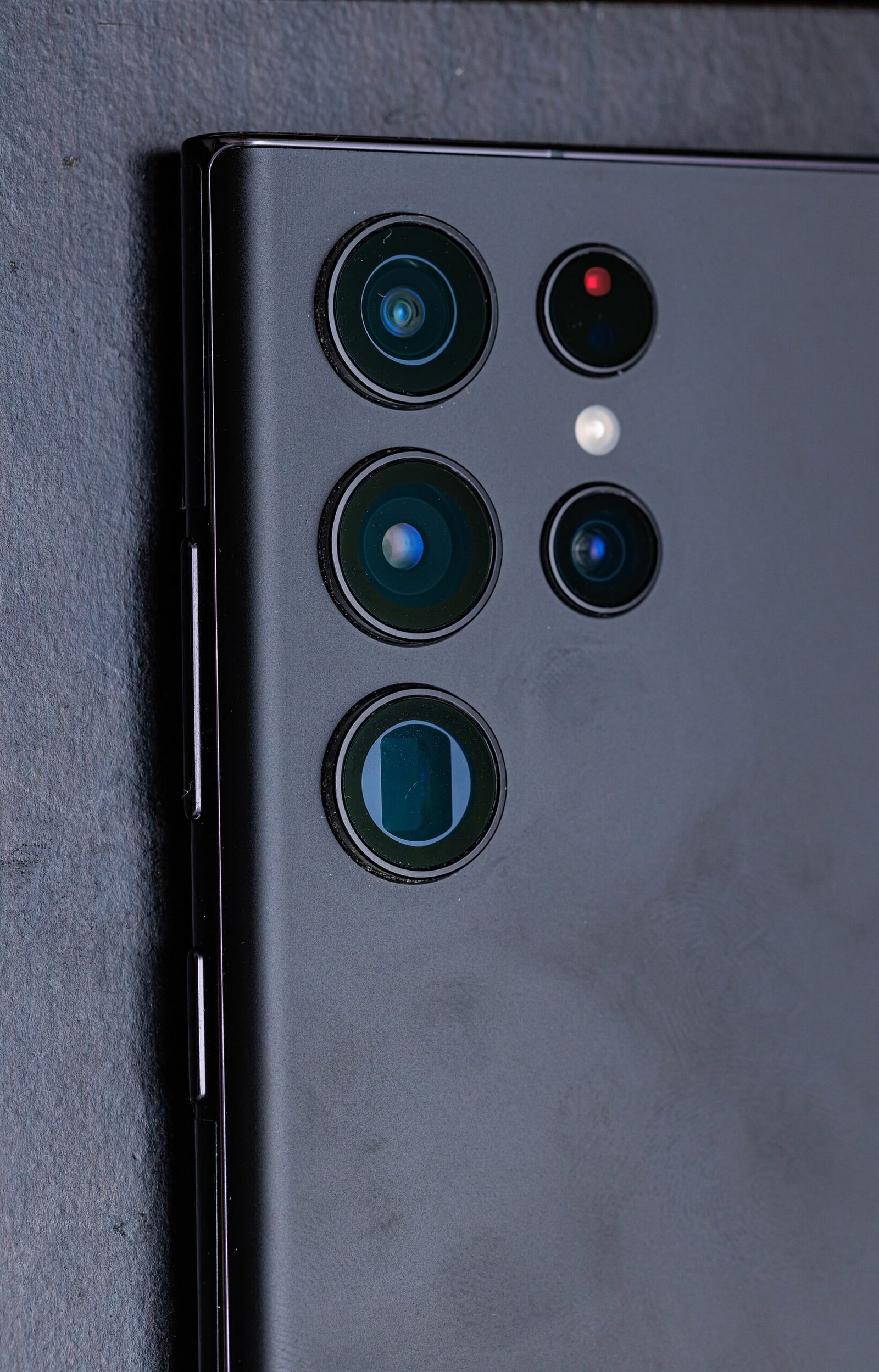
Every phone camera photo starts in the same place: a small silicon sensor that turns light into data. Two companies make nearly all of them, Sony and Samsung, and their names show up in almost every flagship spec sheet. This guide explains what those names mean and why sensor size matters more than megapixels.
Sony: IMX and LYTIA
Sony’s sensors carry two names. IMX is the long-running numbering system: the OnePlus 15, for example, uses a Sony IMX906 for its 50MP main camera. LYTIA is Sony’s newer brand for its stacked CMOS sensors, built with the light-gathering layer and the processing layer stacked on top of each other. The Motorola Signature 27 uses a Sony LYTIA 910 as its 50MP main sensor, and the stacked design is why it can gather more light from a sensor that is not physically huge.
Samsung: ISOCELL
Samsung’s sensors are called ISOCELL, and the best-known line is the HP series that powers its 200MP flagships. The Galaxy S26 Ultra‘s 200MP main camera uses a Samsung sensor from this family, with a 1/1.3-inch optical format and a bright f/1.4 aperture. ISOCELL’s trick is isolating each pixel with a physical barrier, which cuts crosstalk between neighboring pixels and keeps colors clean at high resolutions.

Sensor Size Matters More Than Megapixels
The single most important number on any sensor is its size, written as a fraction like 1/1.28-inch or 1/1.3-inch. A bigger fraction means a bigger sensor, and a bigger sensor collects more light, which means cleaner night shots and less noise. The Xiaomi 18 Pro Max pairs a 200MP main sensor at 1/1.28-inch with a second 200MP periscope sensor, which is why it can keep detail when you zoom. Megapixels are a secondary number. A 200MP sensor usually combines four or sixteen pixels into one in normal shooting, a process called pixel binning, so most of your photos come out at 12.5MP or 50MP anyway. The extra resolution helps when you crop or zoom, but a large 50MP sensor will beat a small 200MP sensor in low light every time.
The Other Sensors in the Phone
The second sensor in a phone matters too. Periscope telephoto cameras use a folded lens to fit a long zoom into a thin body, and the sensor behind them decides how much detail survives at 3x or 5x zoom. Ultrawide cameras usually get the smallest sensor of the three, which is why ultrawide shots look softer than main-camera shots, especially at night. So when you compare phones, look for three things: the main sensor’s size, whether the telephoto is optical or digital, and whether the brand names the sensor at all. Brands that hide the sensor name are usually hiding a small one.
FAQ
What is the difference between Sony IMX and Sony LYTIA sensors?
IMX is Sony’s long-running sensor numbering. LYTIA is its newer brand for stacked CMOS sensors, which gather light more efficiently. Both are Sony sensors; LYTIA is the newer, more premium line.
Are Samsung ISOCELL sensors worse than Sony sensors?
No. Samsung’s ISOCELL HP sensors power its 200MP flagships and are among the best available. The right comparison is sensor size and generation, not brand.
Does a 200MP camera take better photos than a 50MP camera?
Only sometimes. A 200MP sensor helps with cropping and zoom, but a larger 50MP sensor usually wins in low light because each pixel collects more light.
Sources: https://cellularheros.us/phones/oneplus-15/ , https://cellularheros.us/phones/samsung-galaxy-s26-ultra/ , https://cellularheros.us/phones/motorola-signature-27/